Completed · 2 Countries · 5 Days · 20 Participants
Singapore & Malaysia 2026 — Global Experiential Learning Journey
Beyond Sightseeing. Towards Independence, Confidence & Inclusion.
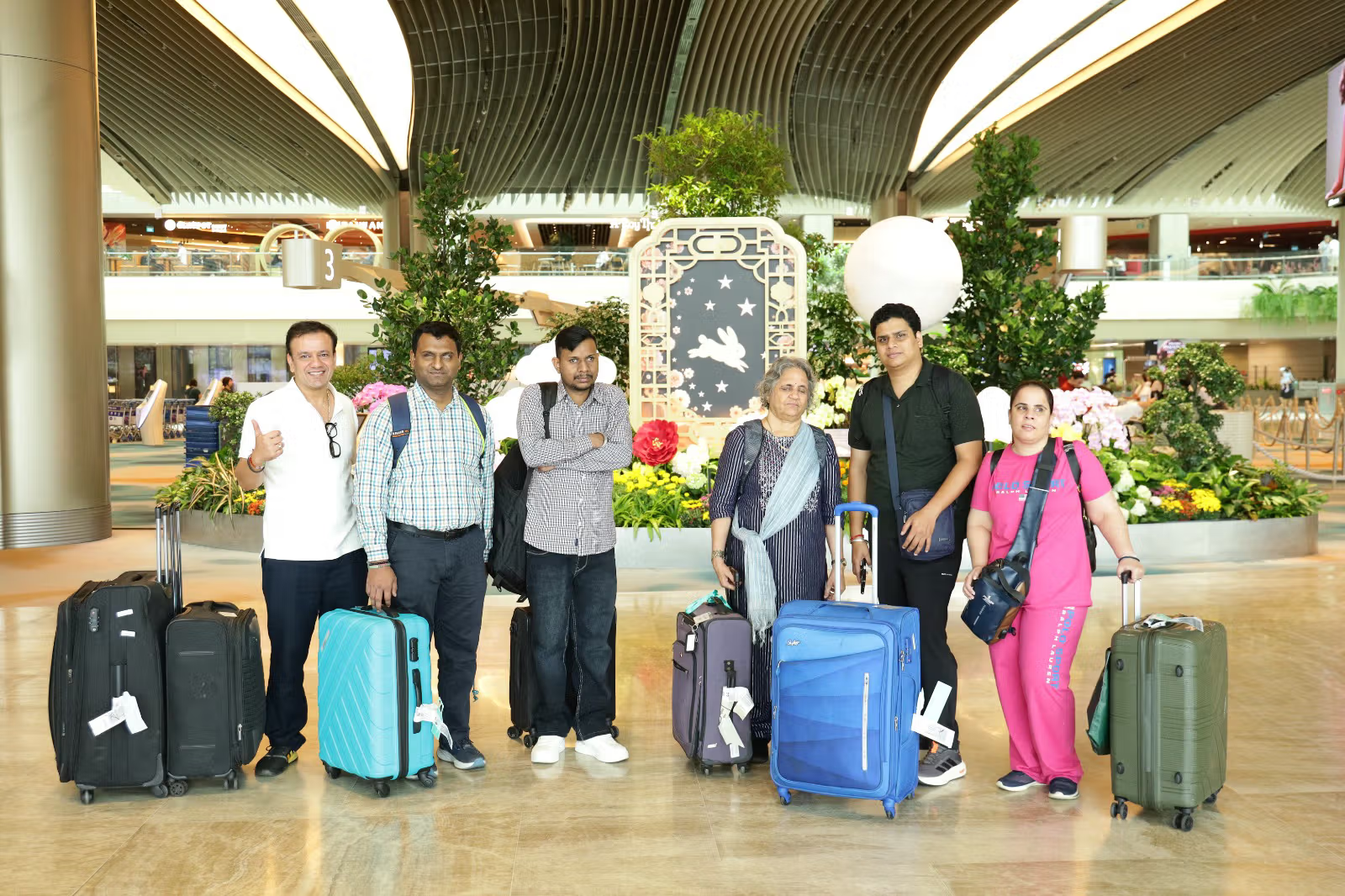
Travellers
20
When
26–30 Sep 2026
Where
Singapore & Malaysia (Johor Bahru)
The Story
RSKC brought together participants from India, the USA, Canada and Kuwait for an international experiential learning journey across Singapore and Malaysia, with the kind support of the Singapore Tourism Board. More than exploring two countries, the initiative transformed real-world environments into opportunities to develop essential life skills, strengthen confidence, encourage independent decision-making and empower persons with disabilities to participate more actively in public and social life.
Rising Star Khilte Chehre brings together 20 participants, including 15 blind and visually impaired individuals, for a transformative international experiential learning initiative across Singapore and Malaysia, with the kind support of the Singapore Tourism Board.
New Delhi | October 2026
What happens when the world becomes your classroom, unfamiliar environments become opportunities for learning, and every new experience helps challenge the boundaries of disability?
Rising Star Khilte Chehre (RSKC), a Delhi-based charitable organisation working towards the empowerment and inclusion of persons with disabilities, successfully completed its Singapore–Malaysia Global Experiential Learning Journey from 26 to 30 September 2026, bringing together 20 participants, including 15 blind and visually impaired individuals, for five days of real-world learning, cultural exploration, social participation and cross-border experiences.
The initiative brought together individuals from India and an international community spanning the United States, including Atlanta, Canada and Kuwait, reflecting RSKC's growing commitment to building a global ecosystem of inclusion, shared learning and disability empowerment.
Spanning two countries—Singapore and Malaysia—the programme demonstrated that international exploration can be much more than recreation. When designed with purpose, preparation and accessibility, it becomes a powerful platform for developing confidence, practical life skills, independence, decision-making abilities and meaningful participation in mainstream society.
The initiative also benefited from the kind support and engagement of the Singapore Tourism Board, together with cooperation from local attractions, destination management teams and on-ground facilitators who helped make the experiences more accessible and meaningful.
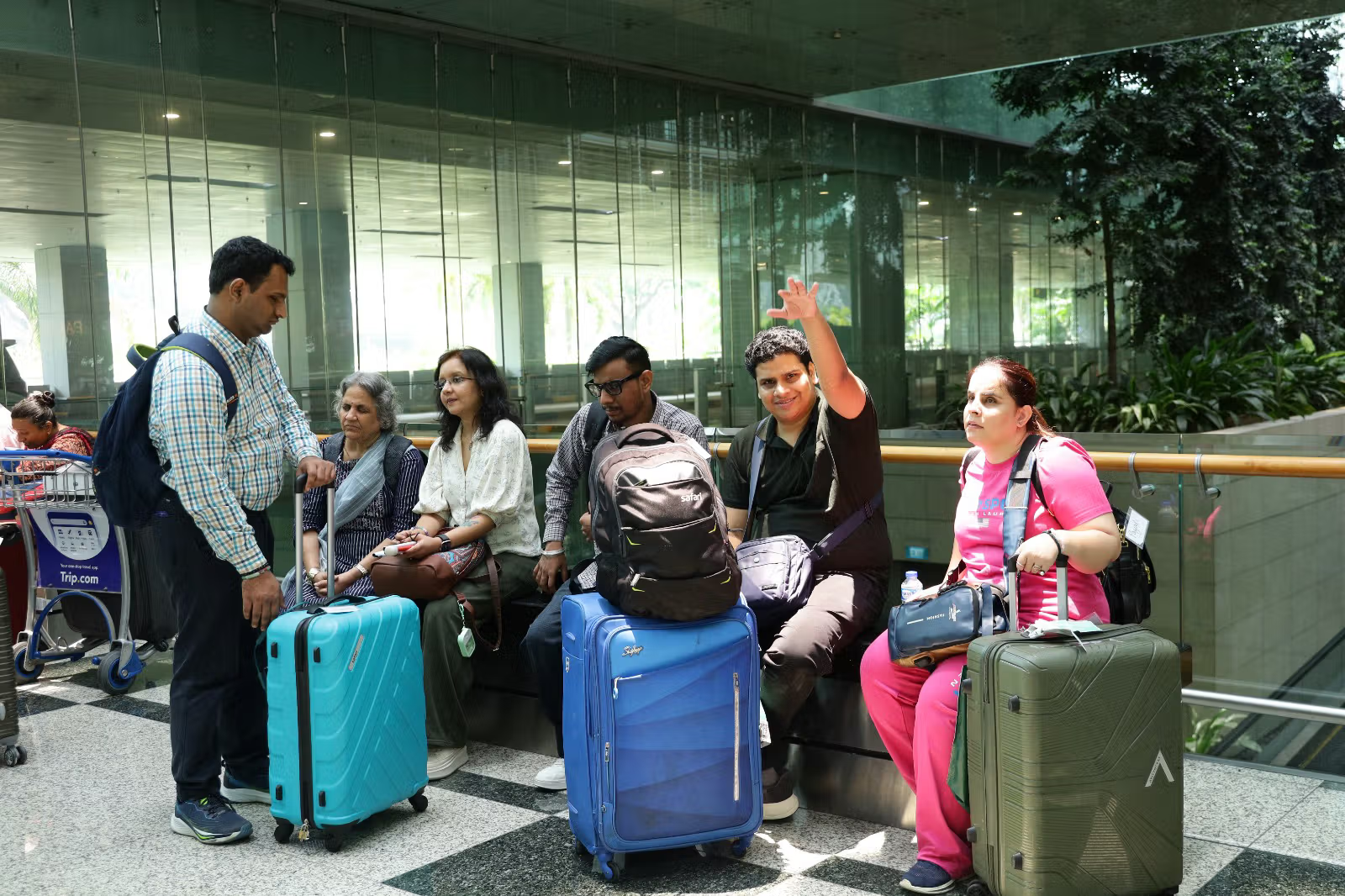
Beyond Sightseeing: Making the World a Classroom
For RSKC, Global Experiential Learning Journeys are not conventional leisure programmes. They are thoughtfully designed real-world learning interventions that enable blind and visually impaired individuals, and other persons with disabilities, to explore their potential beyond familiar environments.
Traditional learning environments can teach concepts, techniques and theories. But some of life's most essential skills are developed through direct experience—navigating an unfamiliar place, communicating with strangers, making decisions in changing situations, understanding social environments, adapting to uncertainty and learning to advocate for one's own needs.
These are not merely skills required for an international experience. They are fundamental capabilities for leading an independent, confident and socially active life.
A person who learns to communicate their accessibility needs at an international airport may feel better prepared to approach a public office or service provider in their own city. Someone who experiences unfamiliar roads, public spaces and transport systems with appropriate support gains practical exposure relevant to everyday mobility. Participants who engage confidently in group activities, public attractions and cross-cultural conversations have opportunities to strengthen their social participation and sense of belonging.
This is the philosophy behind RSKC's Global Experiential Learning initiative: to use the world as a living classroom where accessibility creates opportunity, experience develops capability, and capability enables participation.
The Singapore–Malaysia journey was a practical expression of that philosophy.
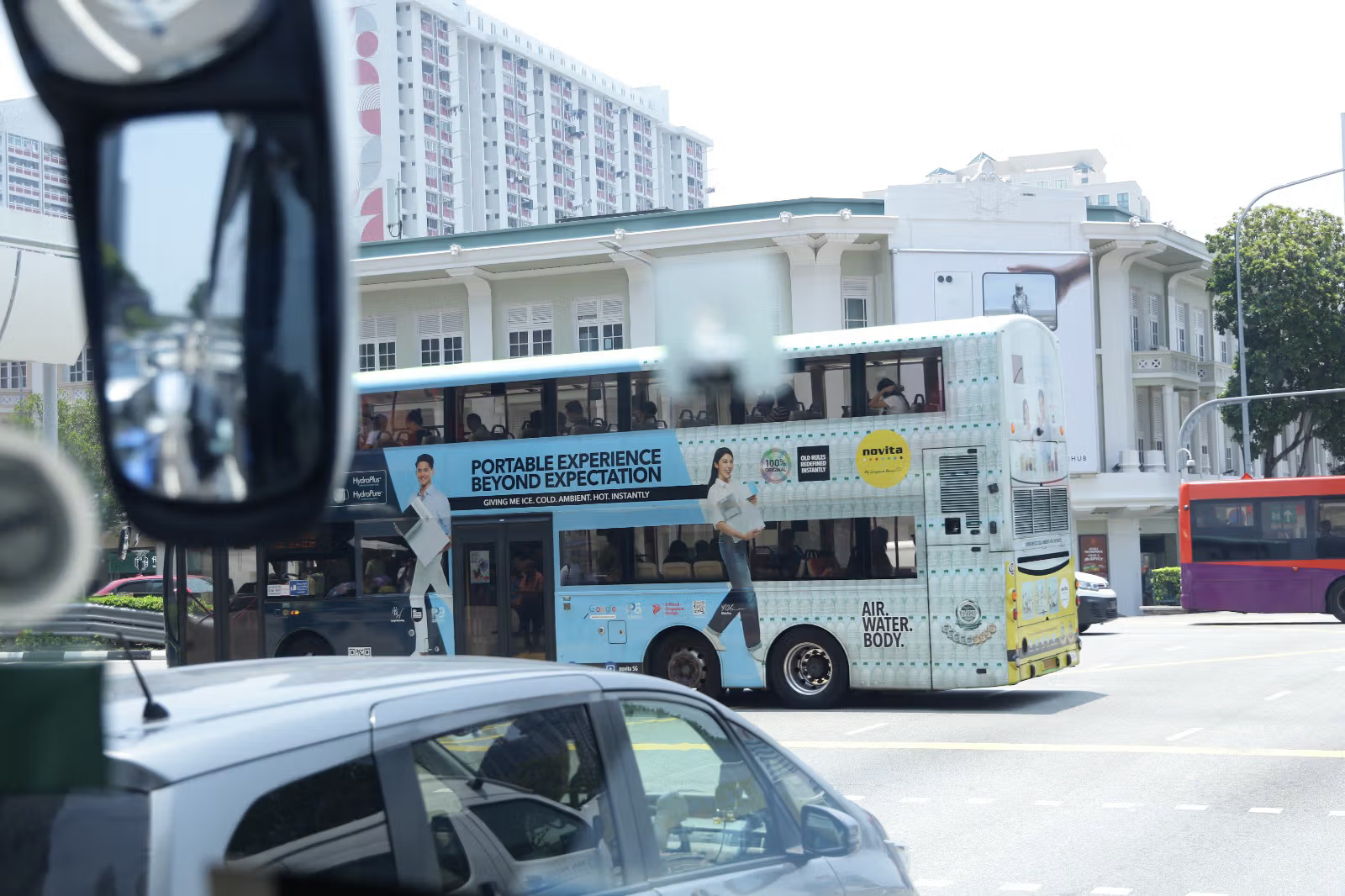
The Learning Began Before the Destinations
The experience was never limited to the attractions participants would explore.
From preparing for international documentation and airport procedures to understanding unfamiliar environments, adapting to group schedules, coordinating across locations and navigating public spaces, the programme incorporated numerous opportunities for practical learning.
Singapore's Changi Airport and the Jewel environment offered exposure to international infrastructure, orientation, communication, organised public movement and the discipline involved in navigating one of the world's busiest international gateways.
Airport environments present real-world situations involving announcements, queues, security procedures, immigration requirements, assistance requests, changing instructions and navigation across large public spaces.
For blind and visually impaired participants, engaging with such environments provides valuable opportunities to practise communication, orientation, patience, situational awareness and self-advocacy.
Importantly, RSKC's approach was not to expect participants to negotiate every challenge without assistance, but to create circumstances where appropriate support and personal agency could coexist.
Independence does not mean doing everything alone. It means having the knowledge, confidence, choice and support to participate in one's own life.
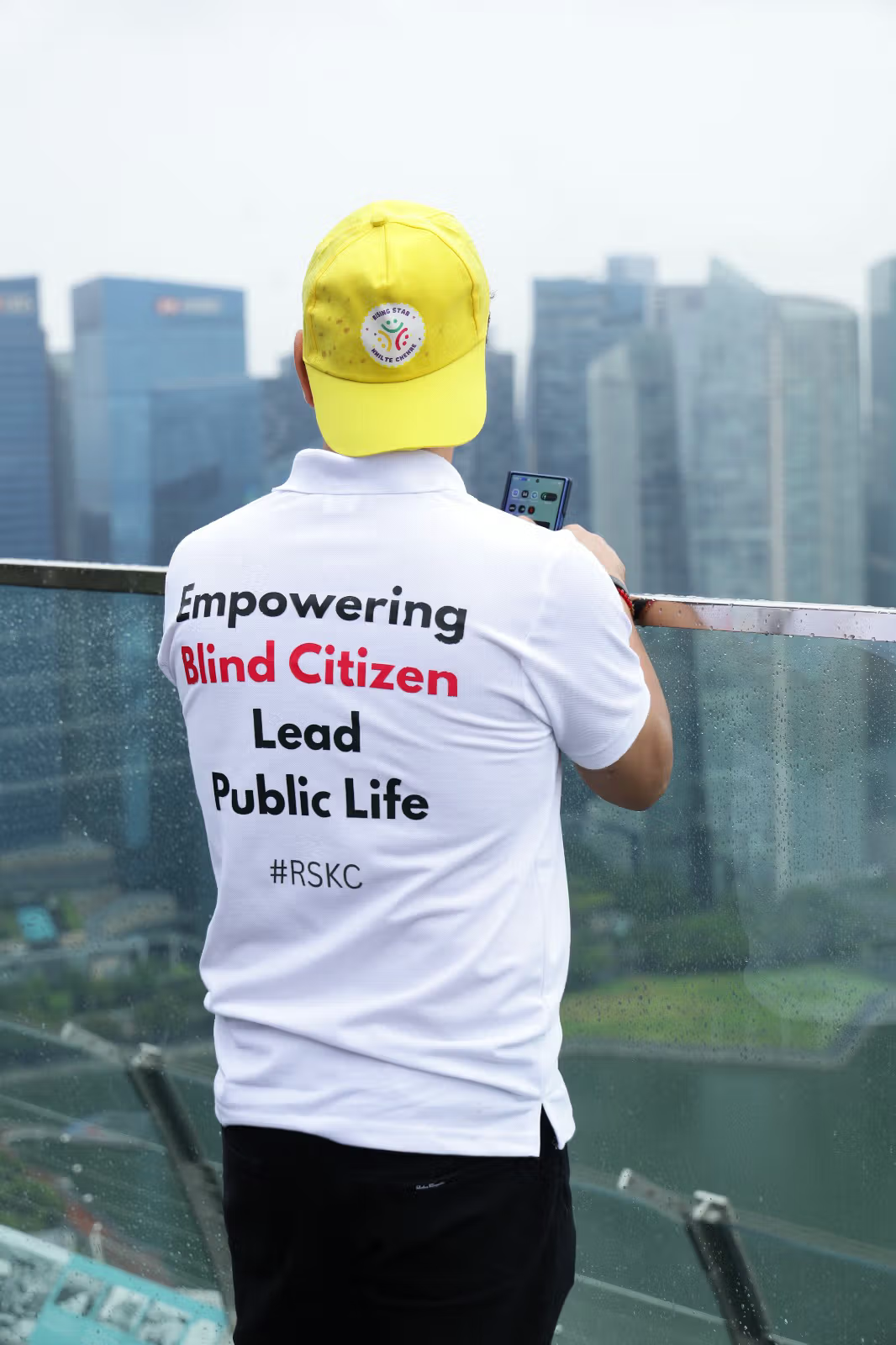
Experiencing Singapore Beyond Vision
One of the most compelling aspects of the initiative was RSKC's effort to challenge the assumption that visually celebrated destinations cannot be meaningful for someone who cannot see them.
Singapore is internationally recognised for its iconic skyline, architecture, gardens, illuminated attractions and carefully designed public environments.
RSKC approached these destinations through a wider sensory perspective, using descriptions, sound, storytelling, guided orientation and contextual explanations to turn visually dominant attractions into opportunities for understanding and discovery.
Gardens by the Bay: Understanding What Cannot Be Seen
At Gardens by the Bay, participants encountered one of Singapore's most recognisable landmarks—the towering Supertrees, reaching heights of approximately 50 metres.
How does someone who is blind understand the scale of a structure they cannot see?
RSKC addressed this challenge through specially prepared audio descriptions that explained the Supertrees' immense height, tree-like architectural form, vertical gardens and environmental purpose.
With valuable cooperation from Gardens by the Bay's management, including support for accessible movement, on-ground coordination and local guidance, the group was able to engage with the destination in a more meaningful manner.
Rather than simply being present at a famous landmark, participants were introduced to its architectural ideas, natural surroundings and environmental significance.
The experience reinforced an important principle of inclusion:
Getting someone to a landmark is access. Helping them experience, understand and connect with it is inclusion.
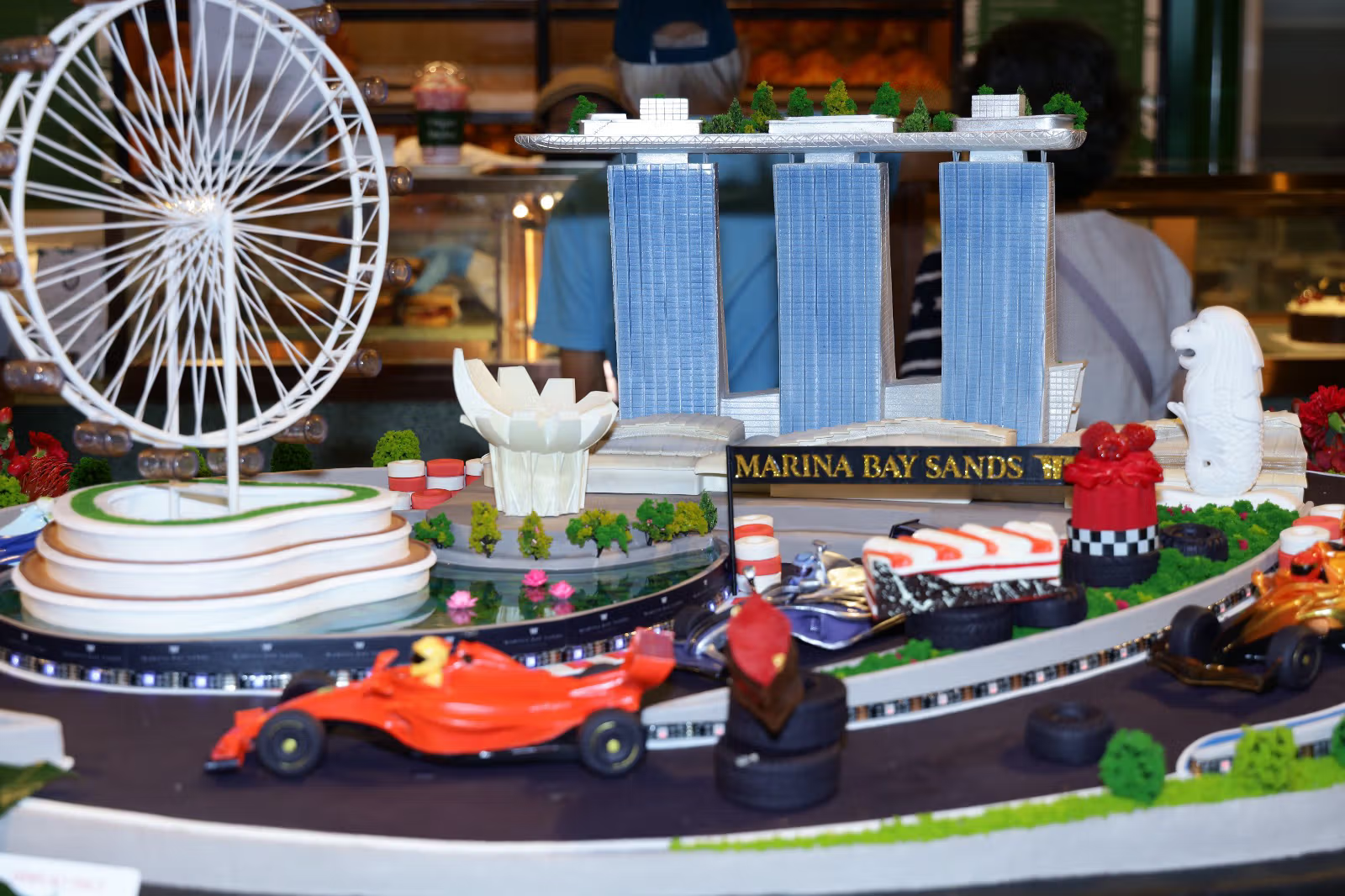
Marina Bay Sands: Discovering a Skyline Through Stories
At Marina Bay Sands, one of the world's most recognisable architectural landmarks, RSKC explored how the scale and character of a modern city could be communicated through meaningful descriptions and contextual storytelling.
The experience was about more than viewing a skyline.
It created an opportunity to discuss architecture, urban development, spatial relationships and the surrounding city, illustrating how the information often conveyed through sight can also be made accessible through language and interpretation.
It challenged the idea that the value of an iconic location depends entirely on visual appreciation.
Night Safari: When the Wild Was Heard, Not Seen
Singapore's Night Safari provided a particularly meaningful example of sensory-led experiential learning.
Participants encountered the wildlife environment through animal calls, forest sounds, guided explanations and the experience of moving through the reserve.
Descriptions of animals, habitats and the surrounding environment helped connect what participants heard with a broader understanding of wildlife and nature.
What is often promoted as a visual wildlife attraction became an opportunity to listen, imagine, learn and engage with the natural world.
The experience also illustrated the importance of accessible interpretation in education, conservation and public recreation.
Sentosa: Recreation, Participation and Shared Experiences
At Sentosa, the programme brought together recreation, entertainment, social interaction and exploration through attractions including the cable car experience and Wings of Time.
These activities contributed to a wider objective: ensuring that persons with disabilities are not excluded from the everyday pleasures, recreational opportunities and shared social experiences that form part of mainstream public life.
Entertainment, adventure and leisure are not privileges reserved for persons without disabilities.
They are part of a full and meaningful life.
Participation in these environments provided opportunities to become familiar with new settings, enjoy shared experiences, communicate within a group and engage with public attractions as active participants.
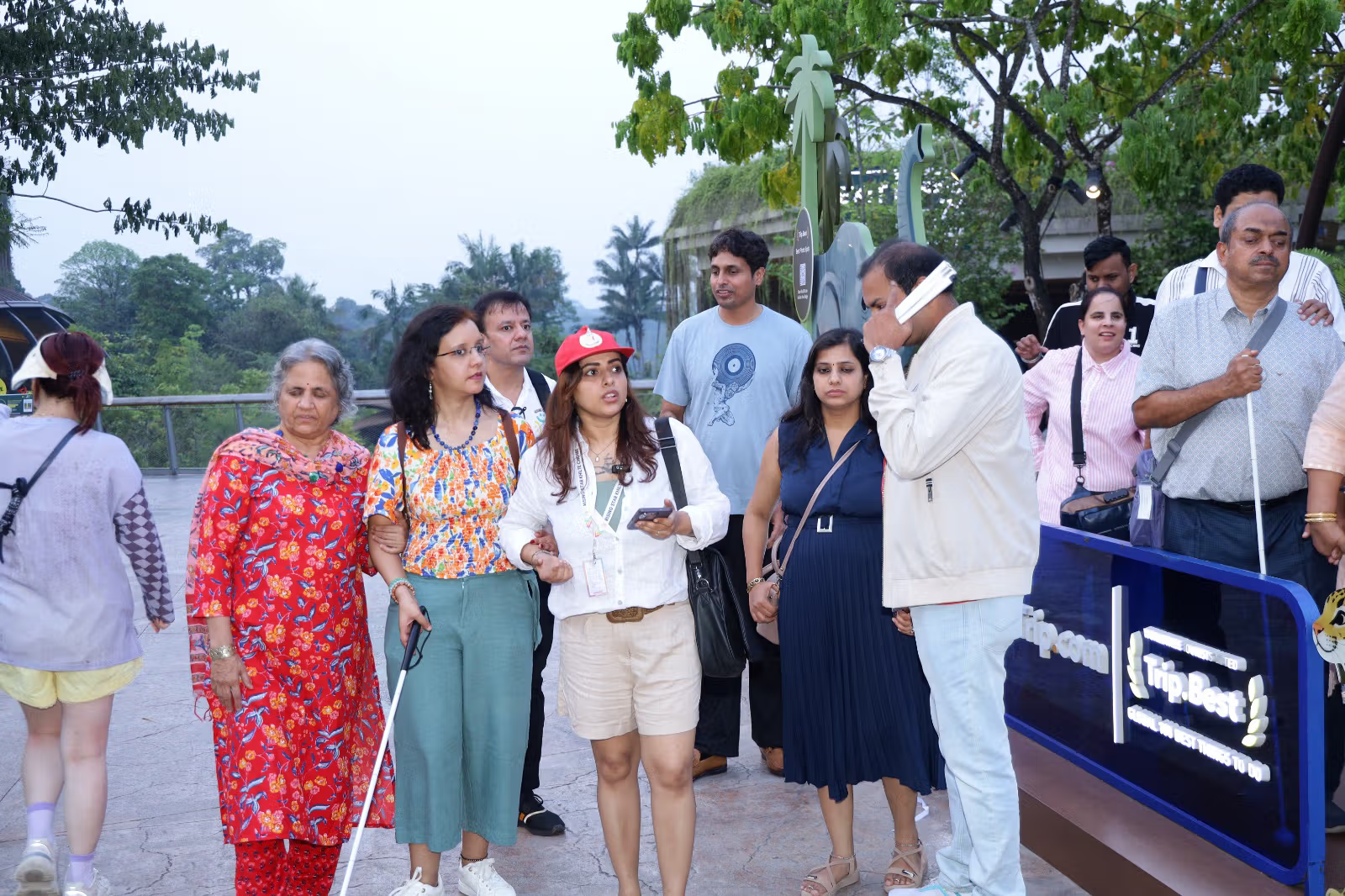
Crossing into Malaysia: Two Countries, One Learning Experience
A significant dimension of this initiative was the inclusion of a second country—Malaysia.
The group crossed from Singapore into Johor Bahru, introducing participants to another national environment within the same five-day programme.
This cross-border experience added a distinct dimension to the learning process.
International borders require an understanding of documentation, immigration procedures, group coordination, changing surroundings and the different administrative and cultural systems encountered when entering another country.
For blind and visually impaired participants, such exposure provides valuable opportunities to develop familiarity with international procedures, communicate needs, adapt to unfamiliar settings and understand how accessibility and public services may differ between locations.
Johor Bahru also introduced participants to another cultural environment, reinforcing that global experiential learning is as much about people, societies and different ways of life as it is about places.
The importance of covering two countries was not the number of destinations explored, but the variety of real-world situations, decisions and experiences encountered along the way.
Singapore and Malaysia together created a broader learning environment, allowing the group to experience the realities of international movement, cultural exchange and inclusive public participation across borders.
The Deeper Impact: Life Skills That Extend Beyond Five Days
The true significance of the Singapore–Malaysia Global Experiential Learning Journey lies in the capabilities it was designed to develop and the wider possibilities it demonstrated.
1. Building Confidence to Participate in Public Life
For many persons with visual impairments, limited accessibility, unfamiliar environments, social assumptions and concerns around safety can restrict participation in ordinary public activities.
RSKC created supported opportunities for participants to engage with busy airports, attractions, hospitality settings and international public environments.
Repeated exposure to unfamiliar situations can help replace uncertainty with practical familiarity and enable participants to approach future public experiences with greater confidence.
The larger goal is not simply confidence in a particular destination, but confidence in occupying public spaces as equal citizens.
2. Developing Practical Life Skills Through Experience
Throughout the programme, participants encountered situations that offered opportunities to practise essential life skills, including:
- Orientation and safe mobility in unfamiliar environments.
- Communication with service providers, guides and members of the public.
- Expressing personal choices and accessibility requirements.
- Understanding public procedures and international documentation.
- Decision-making, adaptability and problem-solving.
- Coordination, time management and personal responsibility.
- Social interaction, teamwork and mutual support.
- Navigating new environments without surrendering dignity or personal agency.
These are capabilities that can influence participation in education, employment, civic life, recreation and everyday community activities.
The lasting value of experiential learning is its ability to connect knowledge with real-life application.
3. Strengthening Social Participation and Belonging
Disability inclusion must extend beyond education, employment and physical accessibility.
It must also encompass friendships, recreation, public gatherings, cultural experiences and the freedom to participate in social life.
The Singapore–Malaysia initiative brought together participants from different places, age groups, backgrounds and experiences in an environment built around shared exploration.
Conversations, group activities, peer interactions and collective experiences helped create opportunities for connection and community.
The programme reinforced the idea that persons with disabilities should not be expected to remain within limited or segregated social environments.
An inclusive society is one in which everyone has the opportunity to participate, connect, contribute and belong.
4. Encouraging Self-Advocacy, Choice and Personal Agency
A central principle of RSKC's model is that support should never erase independence.
Persons with disabilities are not passive recipients of assistance. They are individuals with preferences, abilities, decisions and the right to determine how they participate.
By introducing participants to varied real-world situations, the initiative created opportunities to communicate preferences, ask questions, seek appropriate assistance and take an active role in their experiences.
These opportunities support the development of self-advocacy and personal agency—qualities that are equally important when navigating institutions, workplaces, educational environments and everyday public systems.
5. Challenging Social Perceptions About Disability
The programme also created learning opportunities for people and institutions interacting with the group.
The presence of blind and visually impaired individuals at international attractions, airports and busy recreational spaces challenged conventional assumptions about where persons with disabilities can go and what they can experience.
It highlighted the importance of respectful assistance, accessible communication, trained staff and recognising each individual as a participant rather than someone who must simply be looked after.
For RSKC, this is an equally important aspect of empowerment.
Persons with disabilities should not have to continuously prove that they belong in public life. Public life must become ready to include them.
6. Demonstrating the Role of Global Collaboration
With individuals connected to India, the United States, Canada and Kuwait, the initiative demonstrated how disability inclusion can bring together a community beyond geographical boundaries.
It created opportunities for cultural exchange, peer connection and shared understanding while reinforcing that the desire for independence, dignity, friendship and opportunity transcends national borders.
This international participation represents an important step in RSKC's broader mission to develop a connected global community committed to inclusive experiences and meaningful public participation.
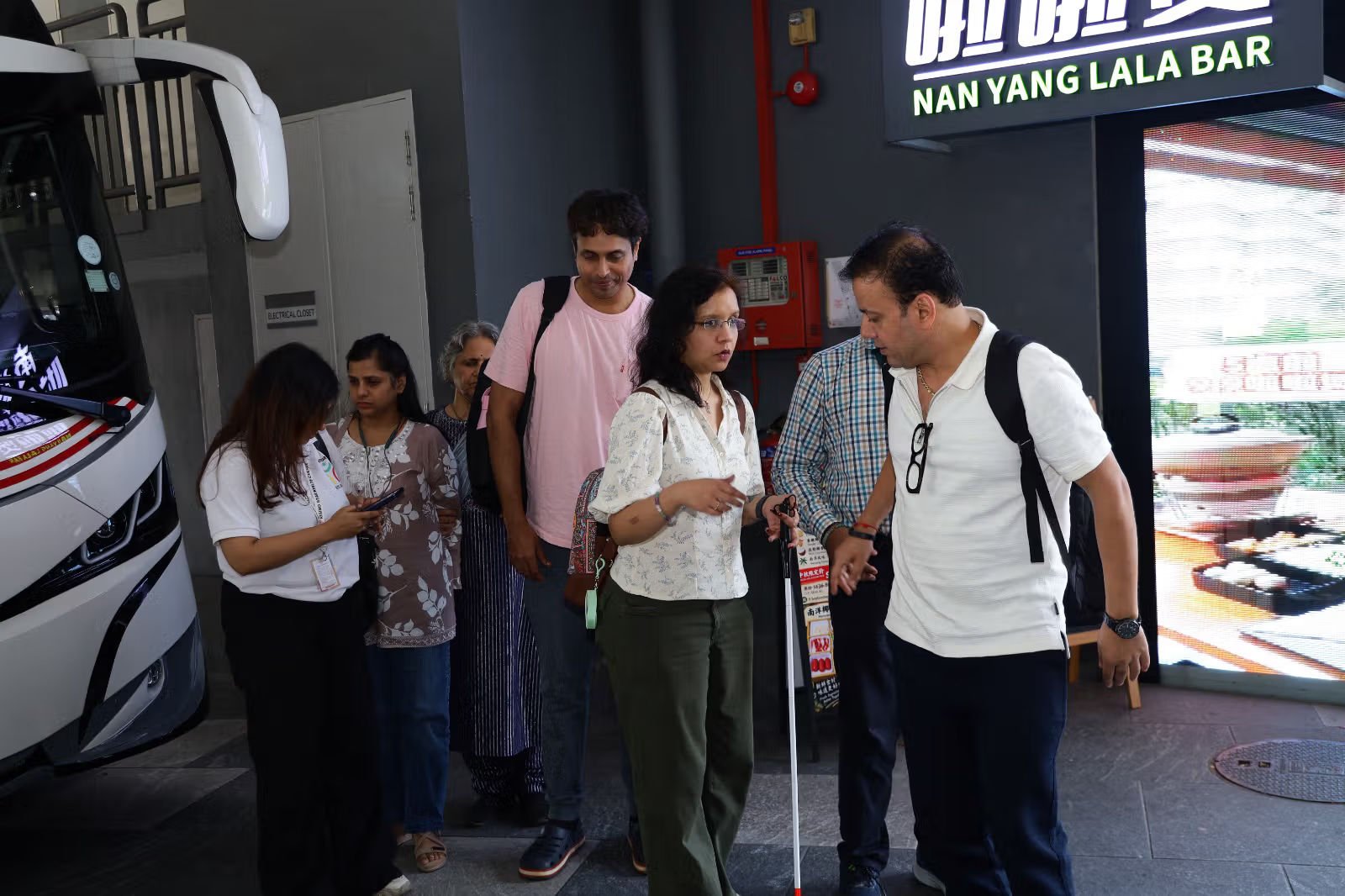
Accessibility Requires Preparation, Partnership and Accountability
Behind the photographs, experiences and memorable moments was substantial planning and coordination.
RSKC's Singapore–Malaysia initiative involved preparation across international documentation, participant requirements, safety considerations, movement schedules, local coordination, accessible storytelling and on-ground support.
A five-day programme involving 20 individuals, including 15 with visual impairments, across two countries required thoughtful operational arrangements and attention to individual accessibility needs.
The journey demonstrated why genuine inclusion cannot be achieved by simply adding volunteers or assistance at the last moment.
It requires preparation, communication, trained and respectful support, cooperation from destination stakeholders and an understanding of the needs and preferences of participants.
The kind support and engagement of the Singapore Tourism Board, along with cooperation from attractions such as Gardens by the Bay and local facilitators, contributed to the experience and highlighted the importance of collaboration between disability organisations and the tourism ecosystem.
Through these engagements, RSKC continued to explore how widely recognised public destinations can offer more meaningful experiences to blind and visually impaired individuals.
Every such initiative also creates opportunities to observe how public infrastructure, hospitality services, visitor information and institutional behaviour respond to persons with disabilities.
These observations are valuable beyond the immediate programme. They can help inform future accessibility planning, strengthen inclusive operating practices and encourage institutions to approach disability inclusion more thoughtfully.
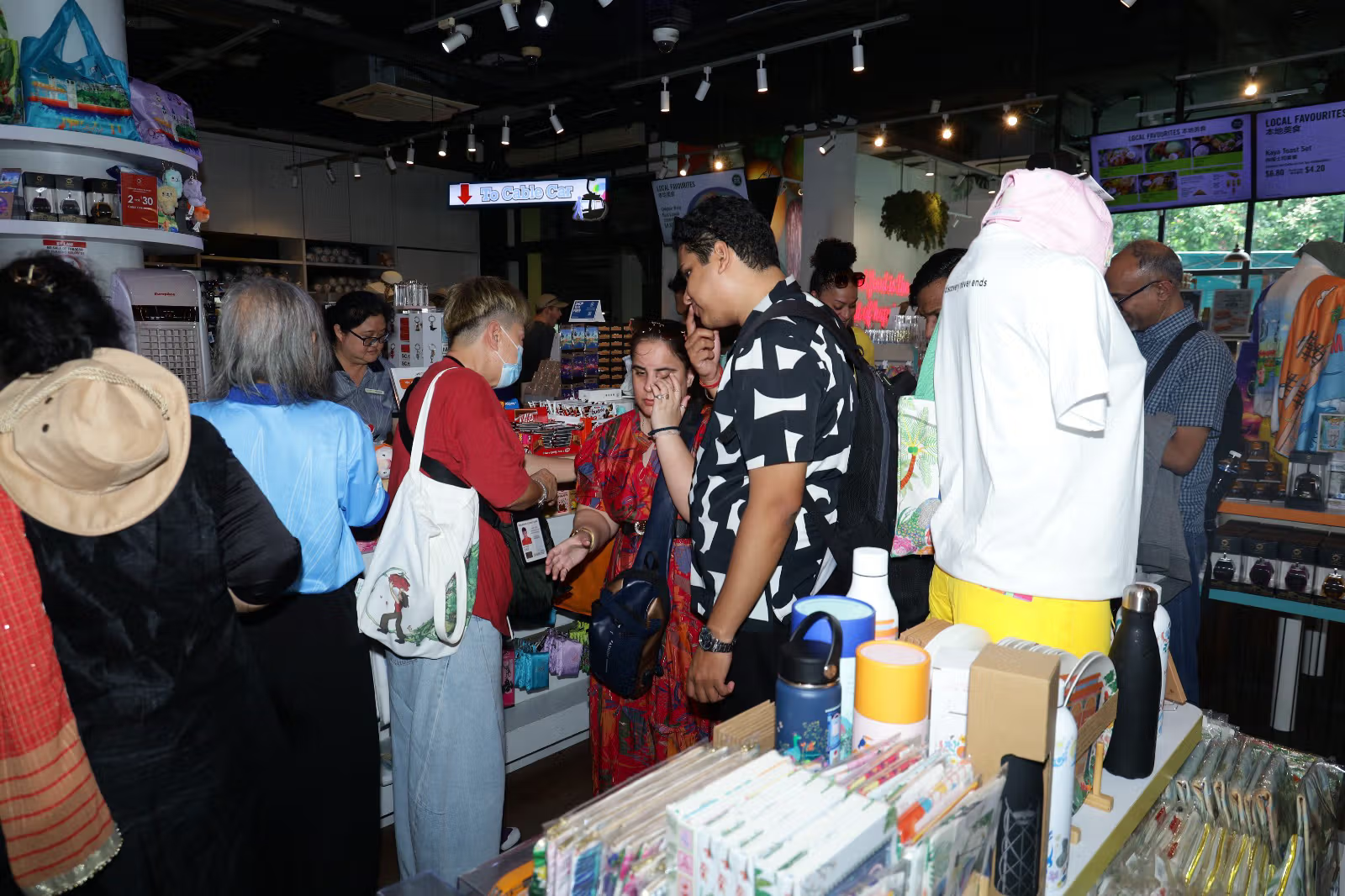
From Personal Experiences to Wider Social Change
The Singapore–Malaysia Global Experiential Learning Journey forms part of RSKC's larger movement to create accessible, real-world learning opportunities for blind and visually impaired individuals and other persons with disabilities.
Building on its previous international initiatives in Dubai, Abu Dhabi and Thailand, RSKC continues to develop a model in which global environments become platforms for skill development, independent living, peer learning and inclusion.
The organisation's long-term vision extends beyond enabling individuals to experience new places.
It seeks to help create a society where blind and visually impaired people can participate more confidently in education, employment, recreation, public institutions and community life.
At the same time, RSKC aims to encourage institutions and society to recognise that accessibility must include human behaviour, information, communication, safety, dignity and equal opportunity.
The impact of such initiatives should therefore not be measured only in the number of participants, destinations or activities completed.
Their deeper value lies in the real-world capabilities participants are able to practise, the connections they build, the barriers that become visible, and the lessons that can contribute to more inclusive public systems.
The five days in Singapore and Malaysia provided an important learning opportunity. The experiences and observations will continue to inform RSKC's future Global Experiential Learning programmes and its efforts to document meaningful outcomes over time.
A Larger Message to the World
The Singapore–Malaysia initiative offers an important reminder that blindness does not diminish an individual's right to explore, learn, make choices or participate fully in society.
A skyline can be understood through description.
A forest can be discovered through sound.
A culture can be experienced through conversation, food, people and shared moments.
And an unfamiliar country can become a classroom for confidence, courage, communication and independence.
But meaningful inclusion requires more than making individual attractions accessible.
It requires a change in how society understands ability, opportunity and participation.
Blind and visually impaired individuals do not need a smaller world. They need a world that recognises different ways of experiencing it—and creates equal opportunities for everyone to participate.
Through its Global Experiential Learning Journeys, Rising Star Khilte Chehre is working to advance this belief: transforming real-world exposure into opportunities for capability building, strengthening personal agency and encouraging the wider systems needed for lasting inclusion.
The Singapore–Malaysia journey was another meaningful step in that direction.
Because the ultimate purpose is not simply to experience more of the world. It is to gain the confidence, skills and freedom to participate more fully in it.
About Rising Star Khilte Chehre (RSKC)
Rising Star Khilte Chehre (RSKC) is a New Delhi-based registered charitable trust working to advance the independence, dignity, empowerment and inclusion of blind and visually impaired individuals and other persons with disabilities.
Through its Global Experiential Learning Journeys, real-world life-skills initiatives, behavioural sensitisation, accessible public participation, community development and advocacy, RSKC works to bridge the gap between accessibility and meaningful inclusion.
Its approach is rooted in a simple philosophy:
Access creates agency. Agency creates participation. And participation creates the possibility of lasting social change.
Website: www.risingstarkhiltechehre.org Email: info@risingstarkhiltechehre.org
Highlights
What made it count.
- 01Two countries, one journey: Singapore and Johor Bahru (Malaysia) in five days, with real cross-border and immigration experience.
- 0220 participants, including 15 blind and visually impaired individuals, from India, the USA, Canada and Kuwait.
- 03Gardens by the Bay: specially prepared audio descriptions made the 50-metre Supertrees understandable without sight.
- 04Night Safari: wildlife experienced through animal calls, forest sounds and guided explanations.
- 05Marina Bay Sands: a skyline discovered through storytelling, architecture and spatial description.
- 06Sentosa: cable car and Wings of Time, shared recreation as part of mainstream public life.
- 07Changi Airport & Jewel: practical learning in orientation, communication and self-advocacy.
- 08Supported by the Singapore Tourism Board, with cooperation from local attractions and on-ground facilitators.
Gallery
140 items
Be part of the next journey.