12th Initiative
Trip to Agra
52 visually impaired participants. One accessible journey from Delhi to Agra. A live model of inclusion in action.
Travellers
52
When
7 September 2025
Where
Agra, Uttar Pradesh, India

The Story
Seat a Dream — RSKC's 12th inclusive initiative — took 52 visually impaired participants from Delhi to Agra on 7 September 2025, uniting car-pooling volunteers, Zingbus marshals, journalists and the Archaeological Survey of India in a live model of accessible travel.
On 7 September 2025, Rising Star Khilte Chehre organised Seat a Dream — its 12th inclusive initiative — taking 52 visually impaired participants on an accessible journey from Delhi to Agra. The initiative was designed to create a real-world accessible journey where visually impaired citizens could experience heritage, mobility, confidence and public participation with dignity.
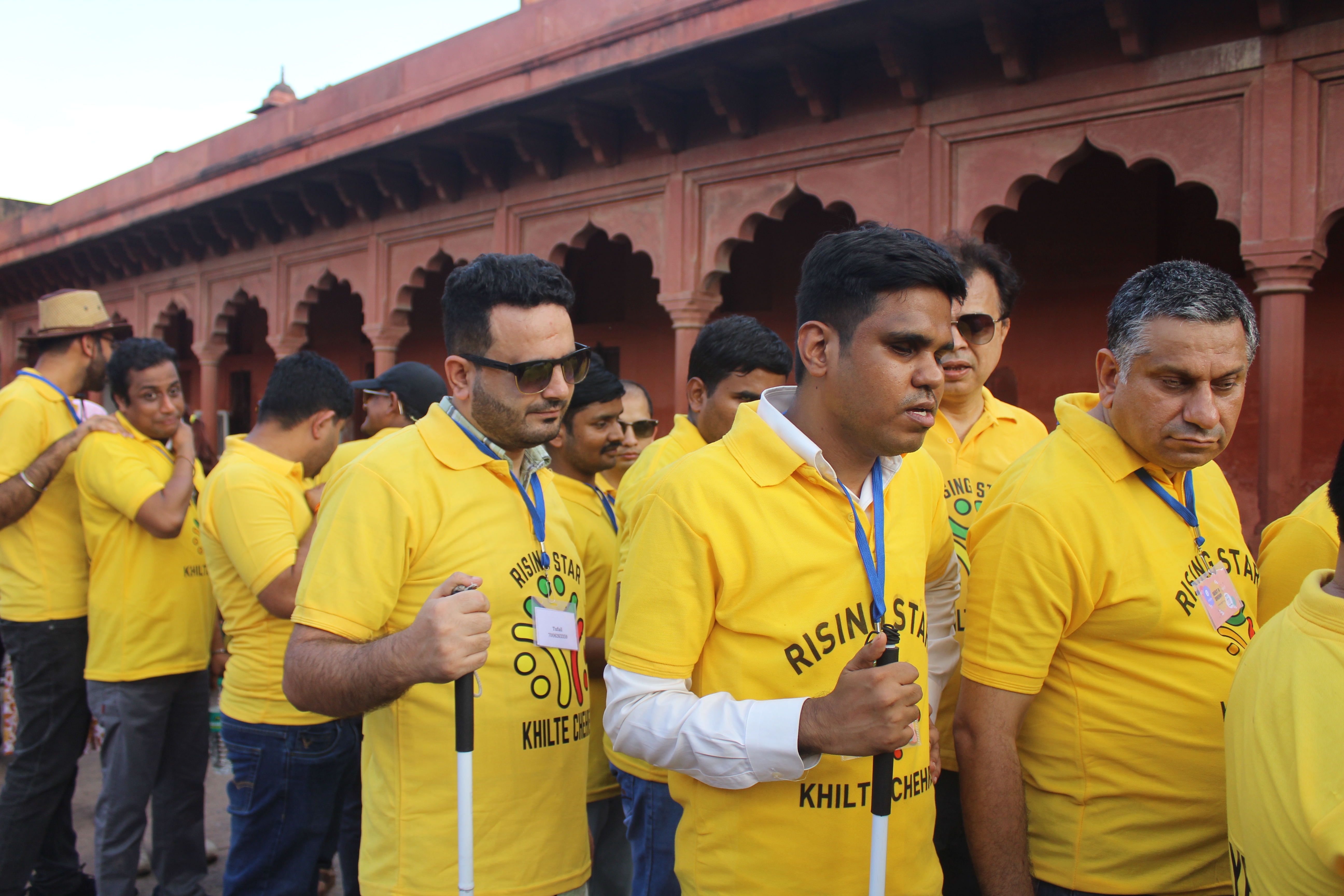
A unique part of this journey was RSKC's car-pooling volunteering concept, where volunteers joined from different parts of India with their own cars, fuel, time and commitment. Their participation reflected the power of community-led inclusion — where people do not only support from a distance, but personally show up to make accessibility possible.
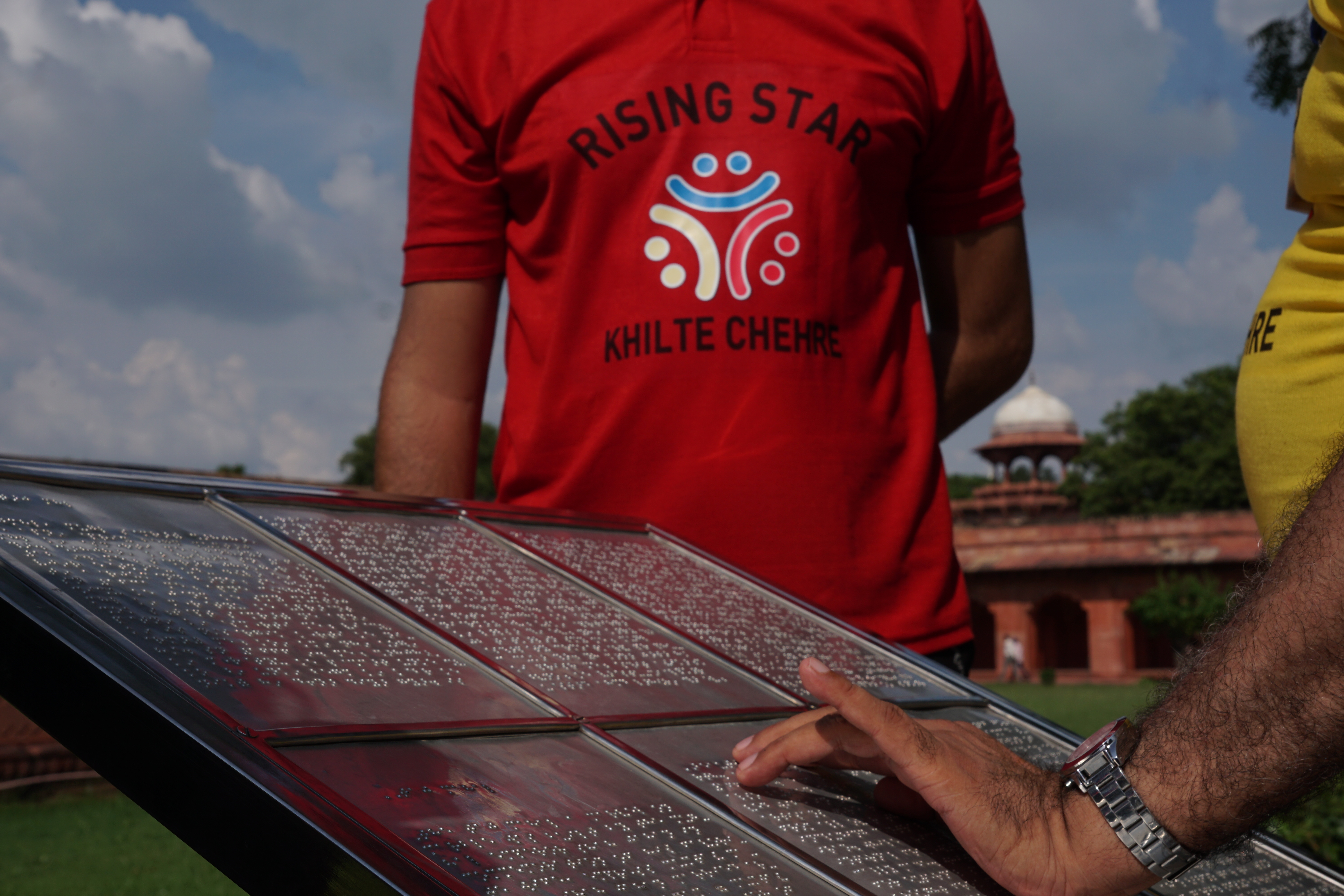
Zingbus supported the journey by sponsoring the bus and providing marshals. Their team also received on-field sensitisation from RSKC on how to communicate with, assist and serve visually impaired travellers with empathy, dignity and confidence during real travel conditions.
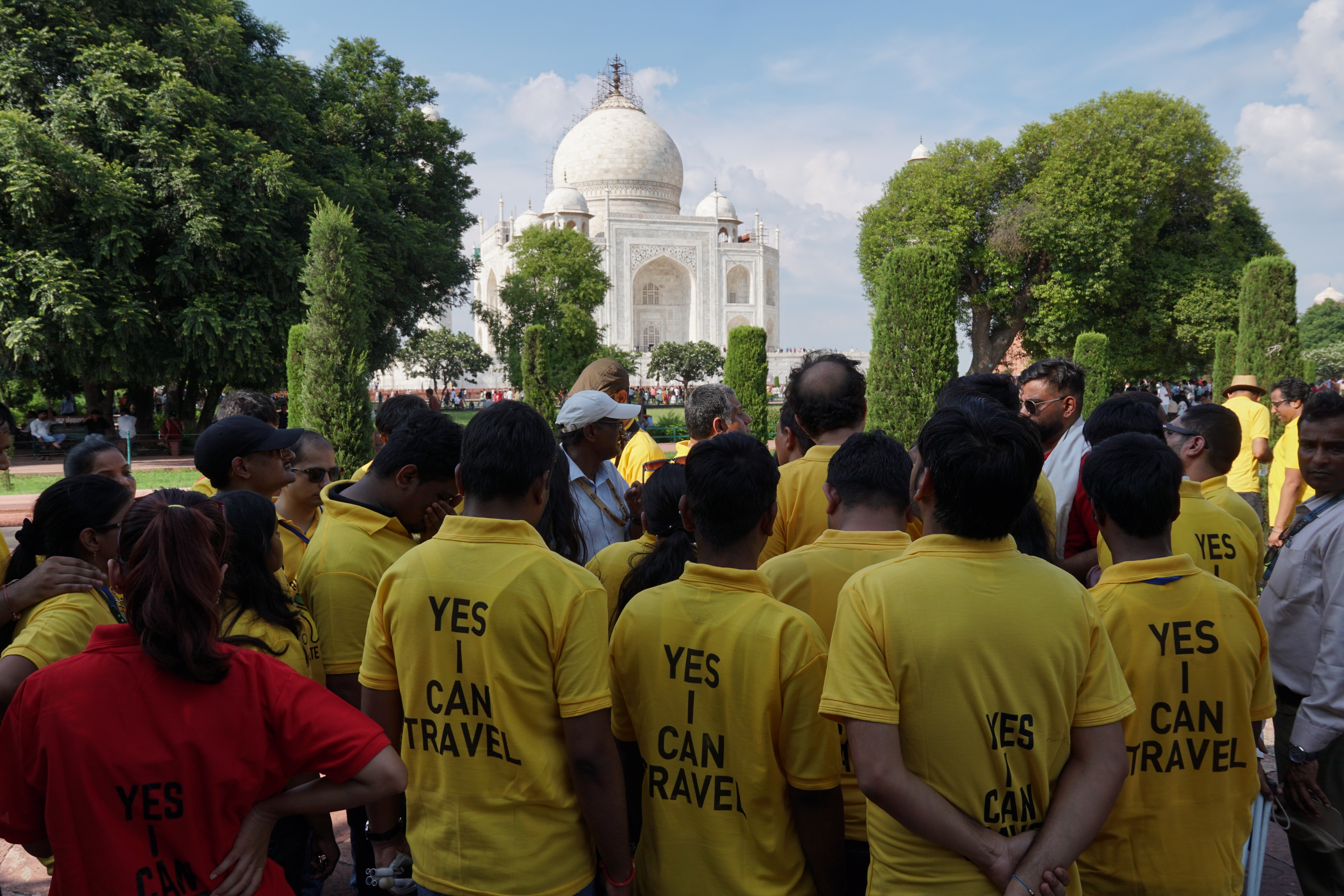
The initiative also saw journalists joining as volunteers — not only to support the journey but to gain practical field insight into the real barriers faced by visually impaired citizens. For RSKC, this was important because responsible storytelling begins with lived understanding. When media professionals experience the gaps on the ground, they are better equipped to voice public-interest issues with sensitivity, accuracy and depth.
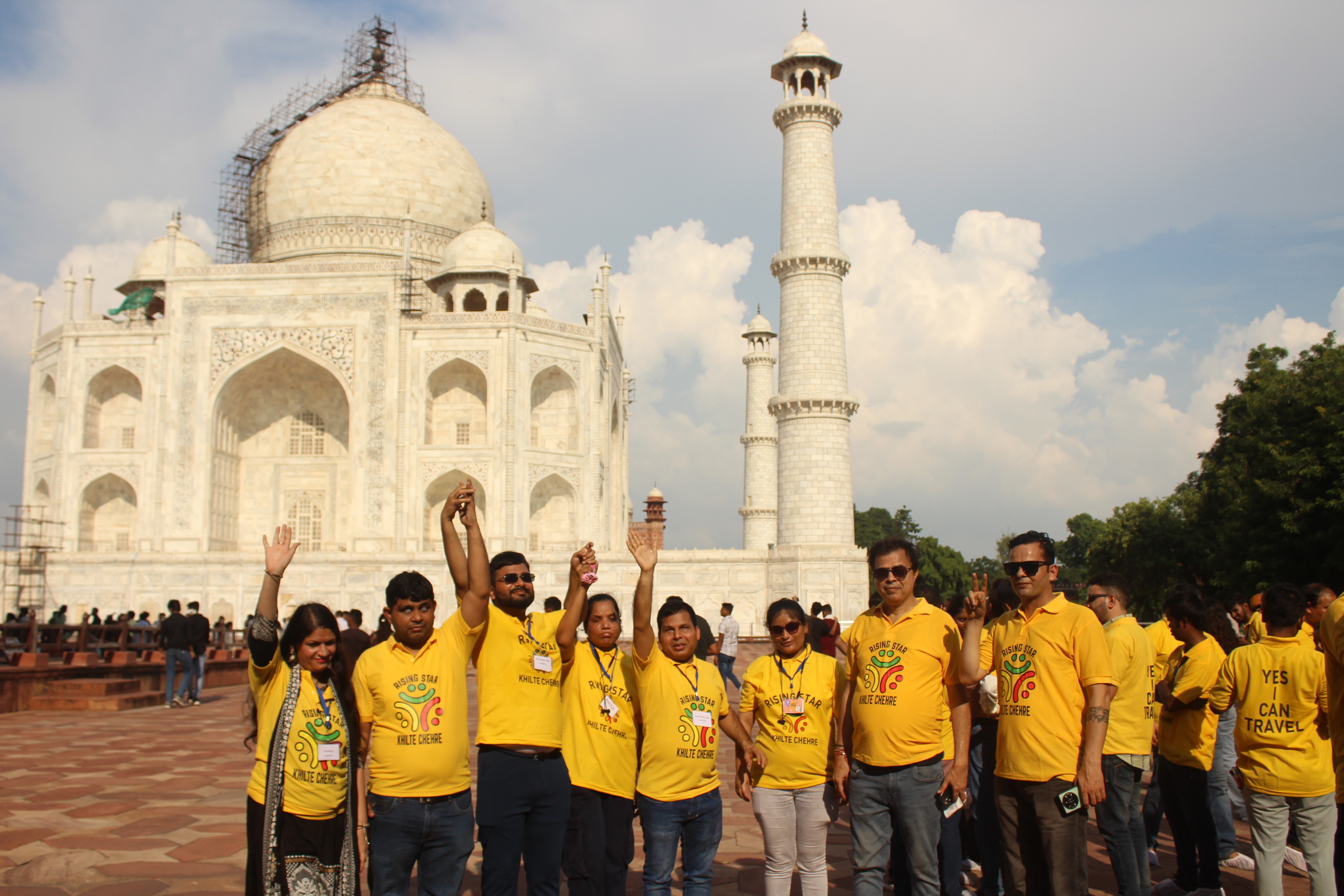
Before entering the Taj Mahal, a miniature model was passed around the group. Fingers traced the smooth dome, the symmetry of the minarets, the arches shaped like frozen waves. For the first time, the Taj Mahal became something tangible — not a photograph, not a legend, but a shape they could hold. "The marble feels different," one of them whispered, his hand resting on the monument itself. "The touch of the Taj Mahal is different. It feels alive."
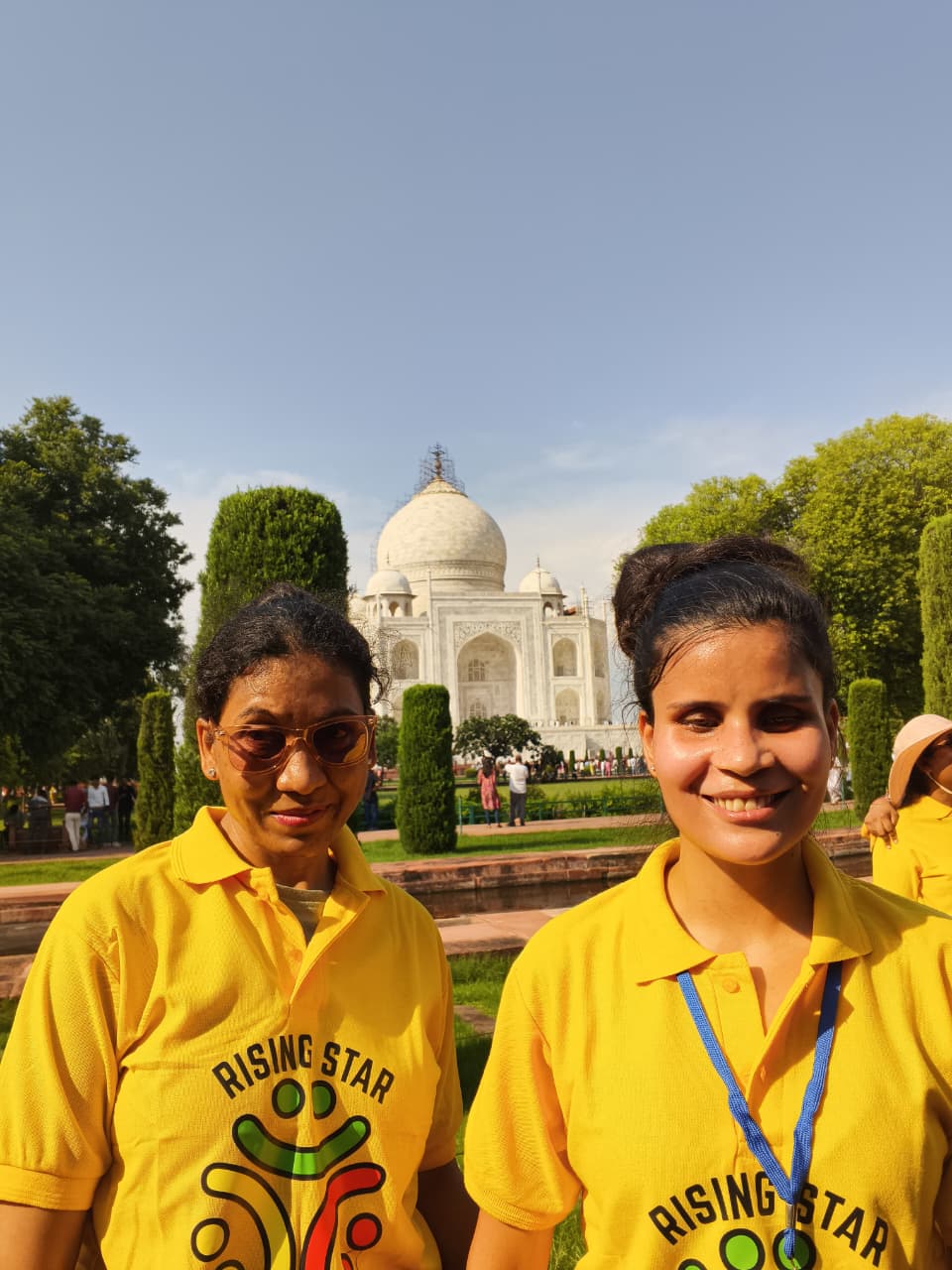
Together, visually impaired travellers, RSKC volunteers, car-pooling supporters, journalists and Zingbus marshals became part of a live model of accessible travel in action. RSKC extends special gratitude to Shri Zulfeqar Ali, Director (Monuments-II), Archaeological Survey of India, for supporting accessibility by waiving the Taj Mahal entry fee for visually impaired visitors.
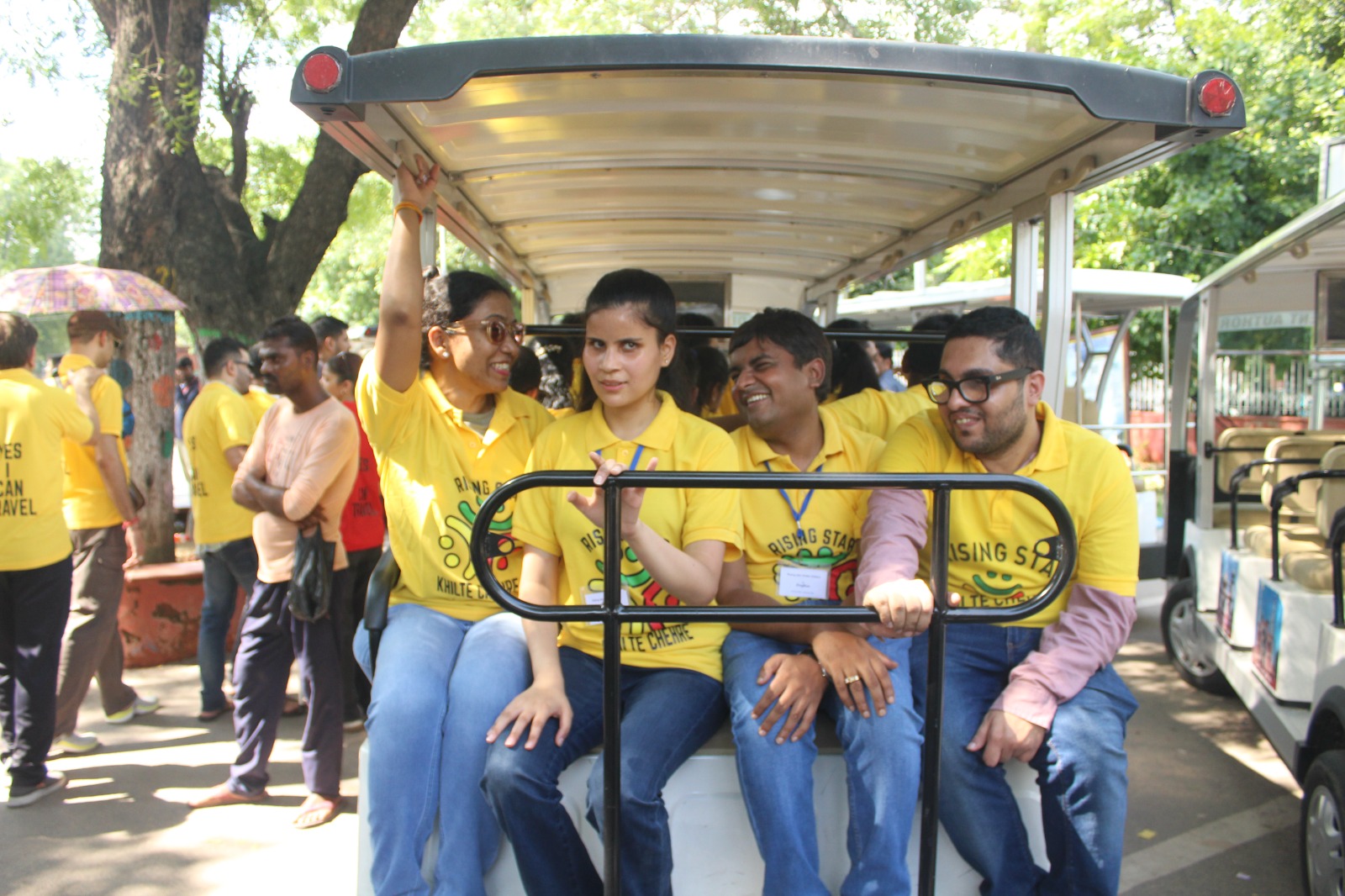
Seat a Dream showed how one organised initiative can bring together community, volunteers, travel partners, media voices and institutions to create journeys of dignity, confidence and possibility for blind citizens.
— Rising Star Khilte Chehre
Highlights
What made it count.
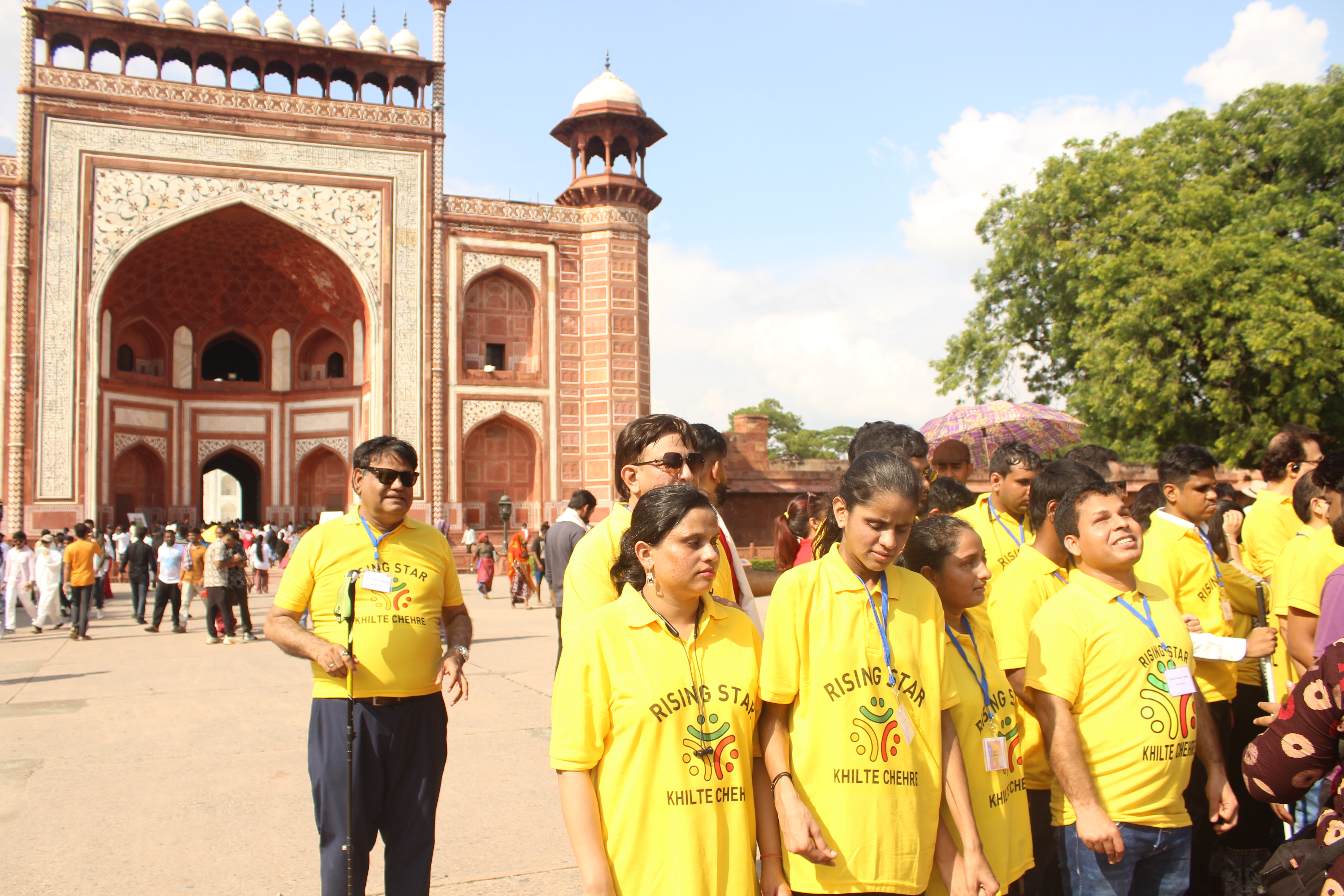
- 01ASI entry fee waiver — Taj Mahal, Agra Fort, Mehtab Bagh, Itimad-ud-Daulah & Fatehpur Sikri
- 02Gratitude to Shri Zulfeqar Ali, Director (Monuments-II), ASI
- 03Car-pooling volunteering concept — volunteers with own cars, fuel and time
- 04Zingbus — sponsored bus + marshals with on-field sensitisation
- 05Journalists joined as volunteers for lived field understanding
- 06Miniature Taj model passed around before entry
- 07Braille descriptions at the Taj Mahal
- 0852 travellers — yellow 'Yes I Can Travel' T-shirts and safety ID cards
Gallery
Watch
As Seen On

Be part of the next journey.